Having put up my tent in the grounds of Old Sarum fort at gone 2130 hours, I was dipping in to my bag to prepare my clothes for the ride the next morning, and laughed bitterly. My neighbour in the tent nearest mine asked me if something was wrong, so I gave the news; I’d left my bibs on my bed at home, and would have to ride with the pants and shorts I was wearing. ‘The adventure starts here,’ they reassured me, clearly finding this very funny.
This is a short blog post about what I learned and saw at this amazing event which went down on Saturday 28 June 2025. Hopefully you learn something from it yourself and avoid a mistake – or at least get some amusement from it, as my very gracious tent neighbour clearly did!
Forgetting your bibs isn’t great, but it isn’t game over either
I am not for one second going to start going here about how bibs aren’t necessary, and chamois is just a conspiracy by Big Bib to sell more bibs, but I was really surprised at how well my riding the next day went. I am not going to kid you that I was thrilled about my situation – there was some ‘shifting’ in order to get some comfort during descents – but for a one-day event only deal, it was tolerable. I was able to ride from Old Sarum to the train station the next day, and from Waterloo Station about 15 km to back home, without any really noticeable pain (just some discomfort). In any case I will for sure try to not forget my bibs the next time, but will also be less nervy about any prospect of riding without them in future too.
I should caveat this by saying I am an experienced cycle courier of many years, which has probably done something favourable for my buns, and I’m accustomed to doing about an hour to an hour and a half of commuter cycling in normal clothes every day. I don’t think this is for everyone by any means. But if you do end up in this situation I think it’s still probably worth going for the ride anyway before doing anything drastic like not starting, or paying a fortune for an express delivery worker to get you a pair in time for a morning start the next day.
I also have the trump card of having a ‘bad’ saddle. Now, in the views of many experienced cyclists, saddles should have practically zero padding, and instead you should just have a really good chamois in your bibs. I can certainly see the wisdom in this until the moment you are reliant on the human posterior as your cushioning, at which point I was very glad to have the padded Madison saddle on my bike, in all its sun-bleached and cracked glory.
Threadlock your computer mount bolt
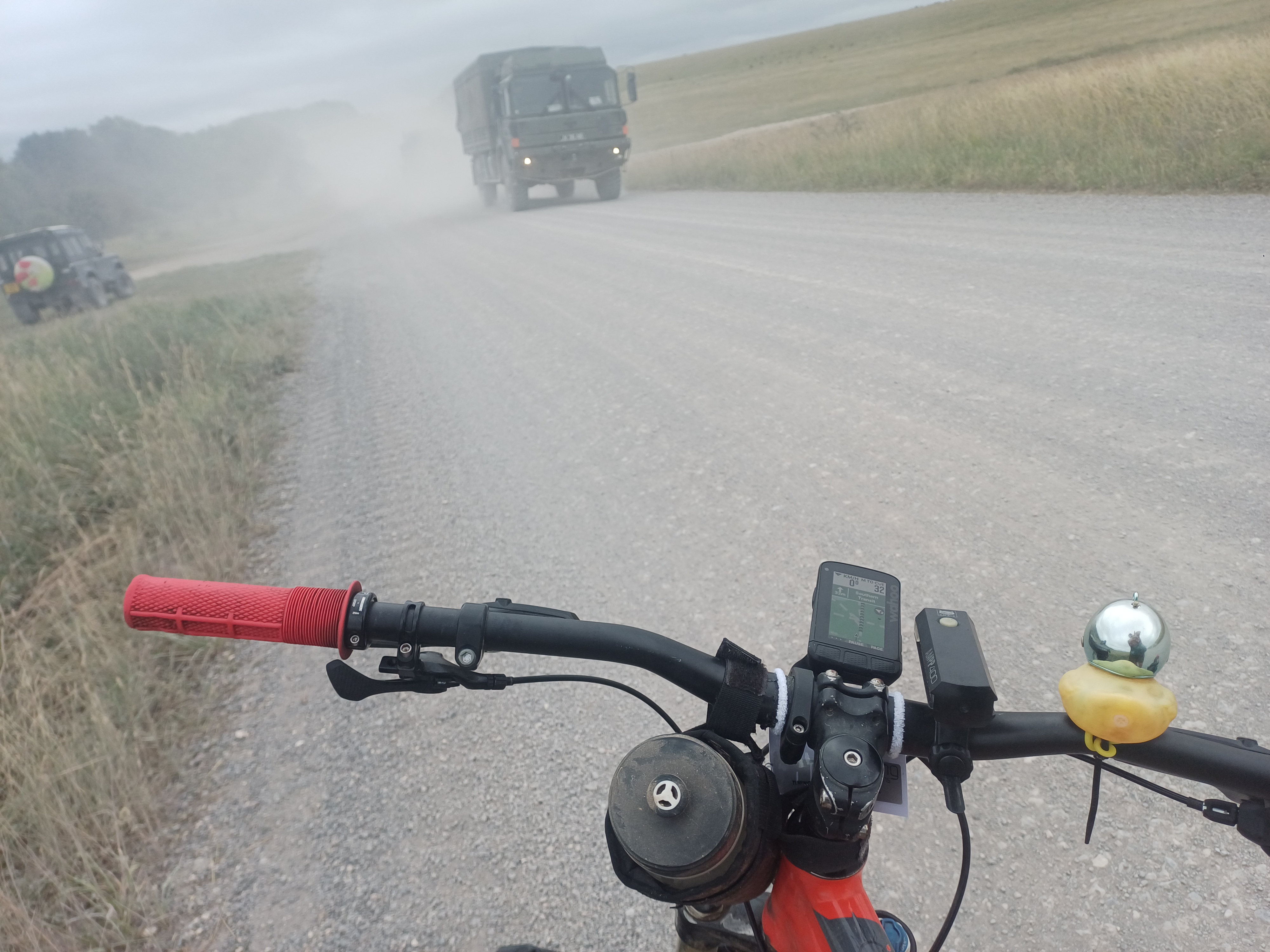
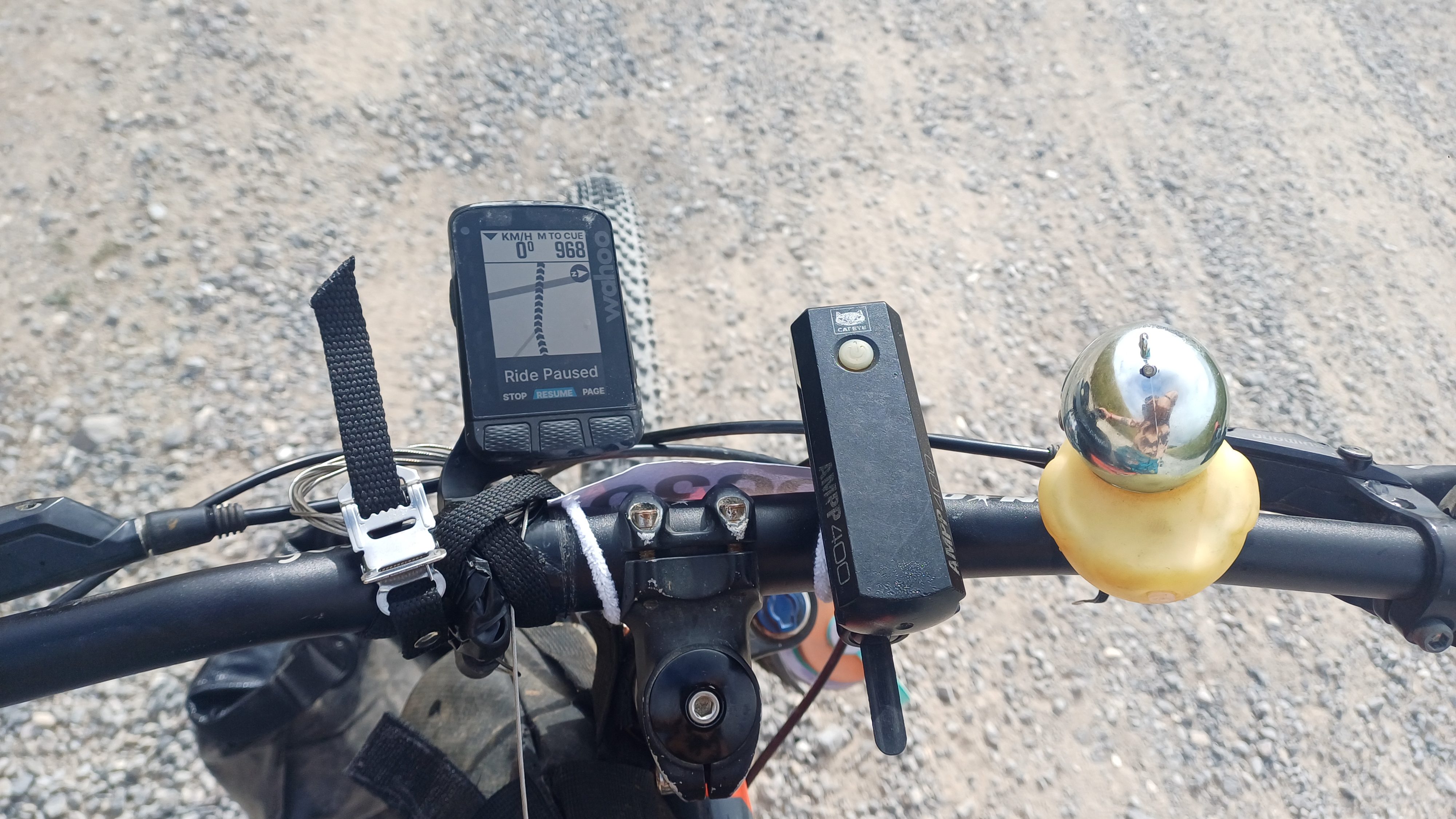
My Wahoo Roam uses a clamp-on holder on the bars, and I’ve moved this holder a few times between bikes. It’s held together with a single 13mm M3 bolt, and while it held on quite nicely for the first 20 or 30 kilometres of ‘The Rebel,’ the bolt ended up vibrating out down a particularly steep and bumpy descent.
Thankfully returning up the hill on foot, I found the computer in its holder, but the bolt itself was long gone. I rescued the situation using a gear cable to hold both halves of the mount closed, and then wrapped a toestrap I had in my bum bag around the mount to keep it shut. This wasn’t quite as good as a replacement bolt but this was secure enough to stop the mount from slipping around too much for the remainder of the ride.
If you’re going to continue swapping the mount between bikes as I do, I think it would be wise to use a mild threadlocker on the bolt to ensure it doesn’t come rattling out on bumps. Threadlocker is an ‘anaerobic adhesive,’ so it goes on to bolts wet, and when the bolt is tightened up, the liquid cures into dry expanding crystals that stop it coming undone. Mild threadlocker is not a permanent adhesive like superglue, but is definitely enough to prevent situations like mine from occurring. Thankfully it didn’t fall off somewhere too tricky to find the computer, or at night time.
‘The Rebel’ requires carrying several litres of fluids, and not just water
The Rebel had a ‘feed station’ at 67 kilometres, which discussing among my peers, was quite a bit later in the route than we’d realised. It can be difficult as a participant to get a grip on how much potable water will be available on a route, especially an off-road route that only passes through one or two settlements, and I think nearly all of us undercooked our fluids. I had about 1.5 litres of fluid in my two cycling bottles, and a 1 litre nalgene bottle on my fork, which I thought was probably overkill, but it ended up being too little. In the end I reached kilometre 57 badly dehydrated, and had to make a snap decision to divert from the course and go to the Three Daggers farm shop in Edlinton, where I could fill up all my stuff. If I do this ride again, I’ll carry another 1 litre bottle at the least, and ideally, have about 4 litres of fluid on the bike total in case I come across anyone badly in need.
Without wanting to write a science paper, there is more to hydration than drinking water. My back of a cigarette packet understanding is that among other things, water is used by the kidneys to filter out nasties from your blood, and that your kidneys require electrolytes and salts to make this happen also, so if it’s beastly hot and dry, and you only drink water, you’ll be ‘washing your kidneys out’ with fluids that don’t have everything needed to keep you healthy and functioning. Thankfully, the event sponsors laid on Styrkr hydration tablets, which I added to my own fluids, and I had my own from a previous event, but this is something I think probably took a few people by surprise. We weren’t forecast for a heatwave, but it was still significantly warmer than any event I’ve done like it before, and the sun was strong with minimal cloud cover. I think the cool early morning start meant the heat really crept up on us as we went past the 12pm-1pm point.
If you’re on a budget, there are cheaper ways to make your own electrolyte supplements to replace what’s lost during big bike rides in hot places than buying pre-made products, which I’ll leave for you to research for yourself (apparently pickle juice is manna from heaven when riding in hot places). But I think a small tub of electrolyte tablets will be in my ‘event bag’ for the remainder of my career. They can add a pleasant fruity tang to your drink, too, though unflavoured ones are available, often in sachets provided in emergency first aid kits for someone experiencing heat exhaustion.

The Stone Circle gravel rides, are shockingly, probably best ridden on a gravel bike instead of a trail bike
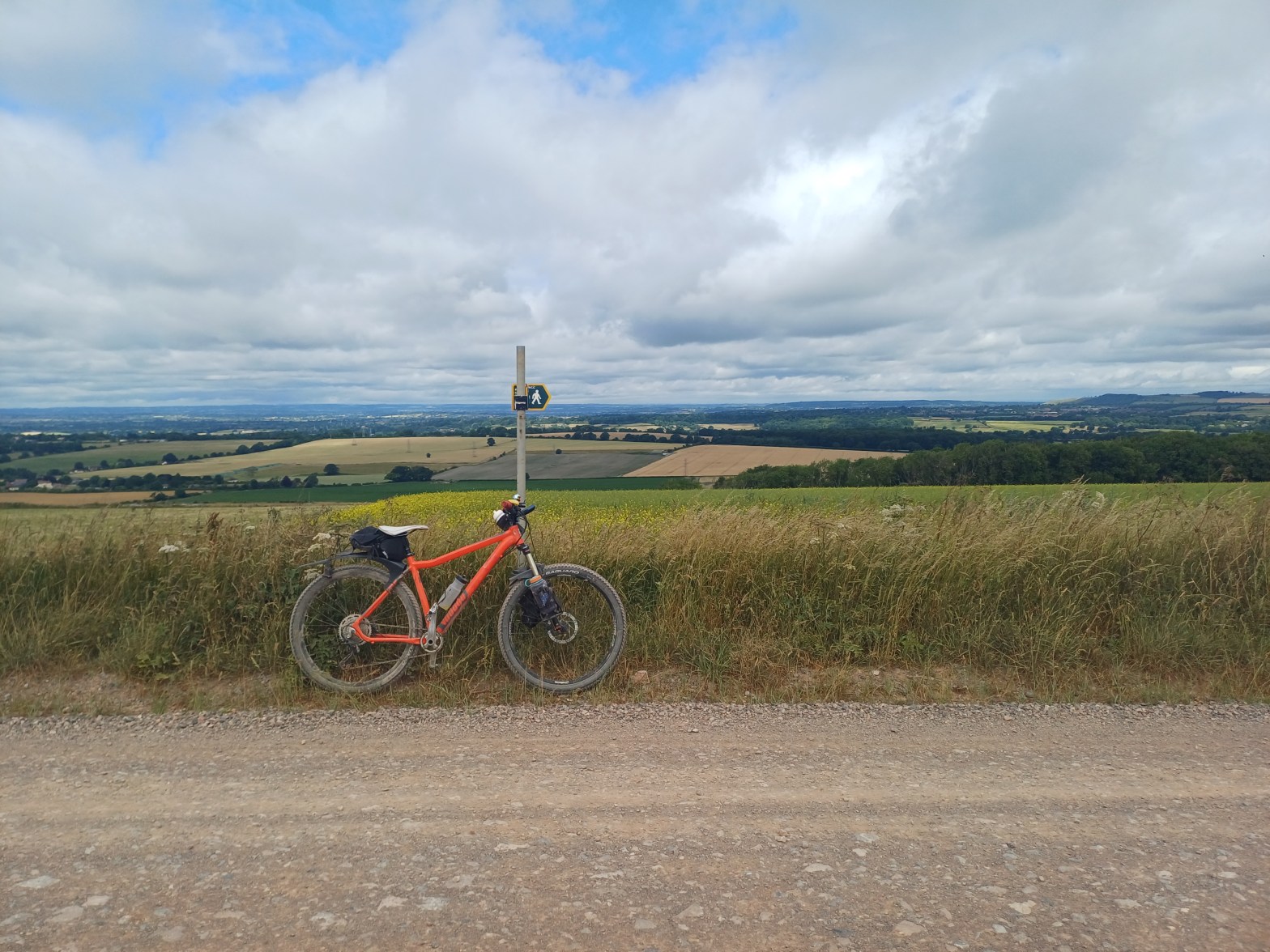
This one really did take me by shock. My trusty Halfords coke can hardtail probably wasn’t the best bike for this ride. I am used to the trail bike being a bit more upright than I’d like on longer sections of smooth-ish gravel, but this nearly always makes up for it by being supremely good at technical descending and ascending, which is very widespread at other events like the Pan Celtic Gravel Rally (see calumonwheels passim). However the Stone Circle team had unexpectedly pulled out an absolute pearler, and the vast majority of the Rebel route is ‘champagne gravel.’ There were for sure a handful of points where I was thrilled to be on the MTB, but this was overshadowed by how that for probably 90% of the time, a more aerodynamic gravel bike would have meant I could finish the ride sooner while expending less effort, or alternatively, have longer breaks cooling down and taking on delicious electrolytes.

The writing was on the wall from the number of people bombing past me. The Stone Circle festival is populated by very strong smashers, and I am too big and ugly to start getting upset by being dropped, but there was no two ways about it, I was spending a lot of time looking at the bottoms of people rapidly making headway in front of me for the same levels of effort, probably less, owing to the more heads-down geometry of their bikes.
Now humble pie time, the other year I did write a blog post about how one should ‘just get a hardtail’ instead of a gravel bike. I have learned from this event that actually there are events in this country where gravel bikes to add up to being worth having to a significant degree over a hardtail. But if you can only have one, owing to budget shortages and storage factors, I do think the hardtail is the way to go. Further, the bizango is a trail bike. It is designed to be taken to Swinley bike forest and wanged down red routes, steep berms, with the dropper post down and arms fully outstretched, this just wasn’t its home territory. I think a cross-country mountain bike would have been a big improvement here while still allowing versatility in muddier and more technical courses which would leave gravel bikes struggling. For all that, it’s indisputable that I brought sub-optimal gear to this event, and I ate the consequences, and next time I’ll consider bringing something else. Watch this space.

Wrapping up
This was a really great event and I commend it to you. I’ve used a lot of learning from previous experiences and got a great night’s sleep at the foot of Old Sarum Fort, using my second-hand North Face one-person tent which was easily packed on to the hardtail’s fork. Getting to the event from London was quite easy. I didn’t board my train at Waterloo until around 1900 on the Friday, and it was no hardship to squeeze it into the carriage in spite of the 780mm wide bars. I arrived to base camp around 2100 and with earplugs in drifted off to sleep quite rapidly.
I’m thinking about one day trying the ‘size up’ event: Stone Circle offers 3 distances of 80, 137, and 220 kilometres. I don’t think I’ll bring my trail bike for it, but never say never. Though perhaps I will pack my bibs.
Get the deets about Stone Circle here: https://www.stonecircle.cc/

 Calum On Wheels