The blog has been pretty quiet for the past few months, specifically from May 2026 to the present, the end of August. The reason for that is that I’ve had my energy and time eaten up by this completely crackers job I got on a Facebook group – being a ‘soiler,’ which is a type of mineral exploration. This had me digging up soil in places where I’m assuredly the first person to walk, combatting heat exhaustion, wearing a chest rig with a can of bear spray and playing ‘sad girl breakup music’ to avoid surprising any animals. It’s wild what you can end up doing when you know where to apply. To prevent the blog becoming a rant, I’ve kept the classic ‘three things I’ve learned’ structure. Enjoy!
All the photos are my own. Taken on native land.
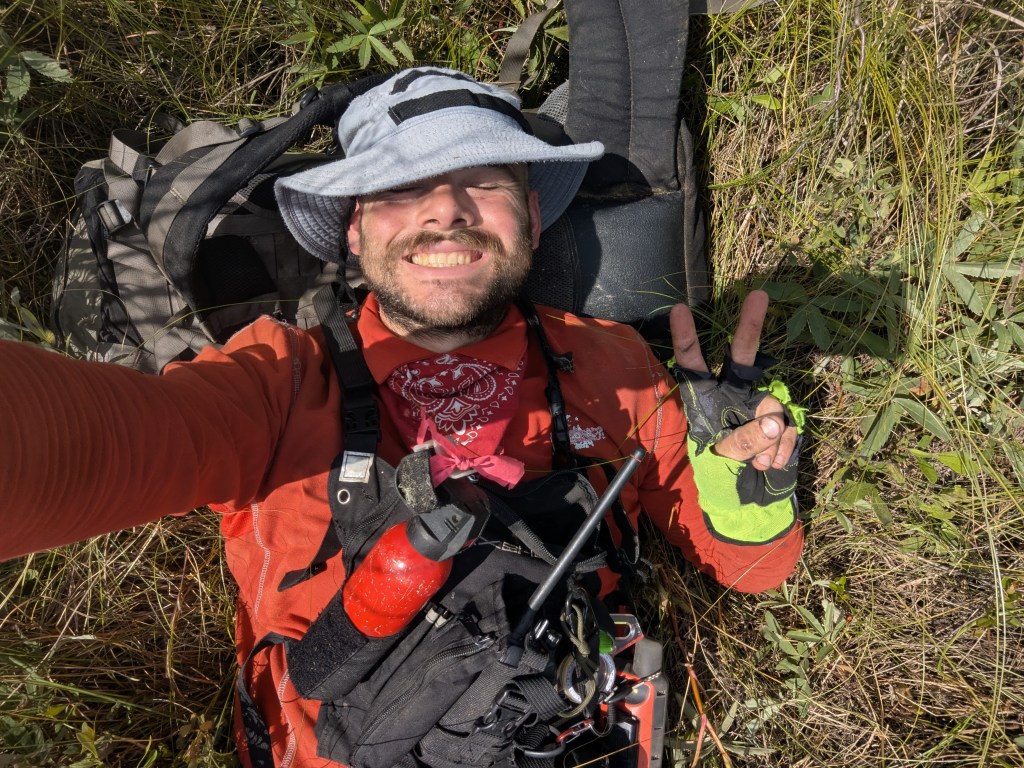
I learned that Ontario, Canada, gets hot, and heat is no joke
As a mineral explorer, you’ll start work very early by most people’s standards. I’d often be up for 05:00 with a ‘safety meeting’ shortly after. There’s a really good reason for this; Ontario gets roasting hot around midday, and the sooner you are out (and back), the better. By preference, I’d actually be up and away even earlier – apparently field workers in Iraq start work at 03:00 – but some of my colleagues drew a line. As a consequence, we would be in bed and lights off by 21:00 latest, or ‘cowboy midnight’ as it’s apparently called.
I was taken aback by how hot it would get, and one thing that really spooks me out is high heat coupled with physical work in a solo environment. Heat affects your reasoning, and people who’re out of their senses hurt themselves. The brain and other internal organs require oxygen via respiration to function, and the hotter it is, the less O2 they’ll be receiving. It isn’t enough to ‘grind it out,’ even the biggest and strongest person can be laid low by a slip or a fall, especially clambering over ‘deadfall,’ i.e. trees that have for some reason fallen over and make up entire acres of your traverse. Another hazard that occurred to me would be ‘FOOSH,’ or falling onto an outstretched hand. It’s reflexive that people falling will put out hands to arrest their fall, and if the hand lands on something sharp, it could result in a grave laceration (this is a big reason why I always walk with two poles – in the event of a fall, you’ll stick a pole out to stop your fall rather than a hand). On some days it would peak at 40 degrees centigrade, and any kind of shady tree cover would be a huge mercy. In a role like this you can’t go to 7/11 and resupply; you only have what you bring with you. By the peak of the heat, I was carrying 4.5 litres of fluid with electrolytes mixed in, to replace the minerals I’d sweat out while working.
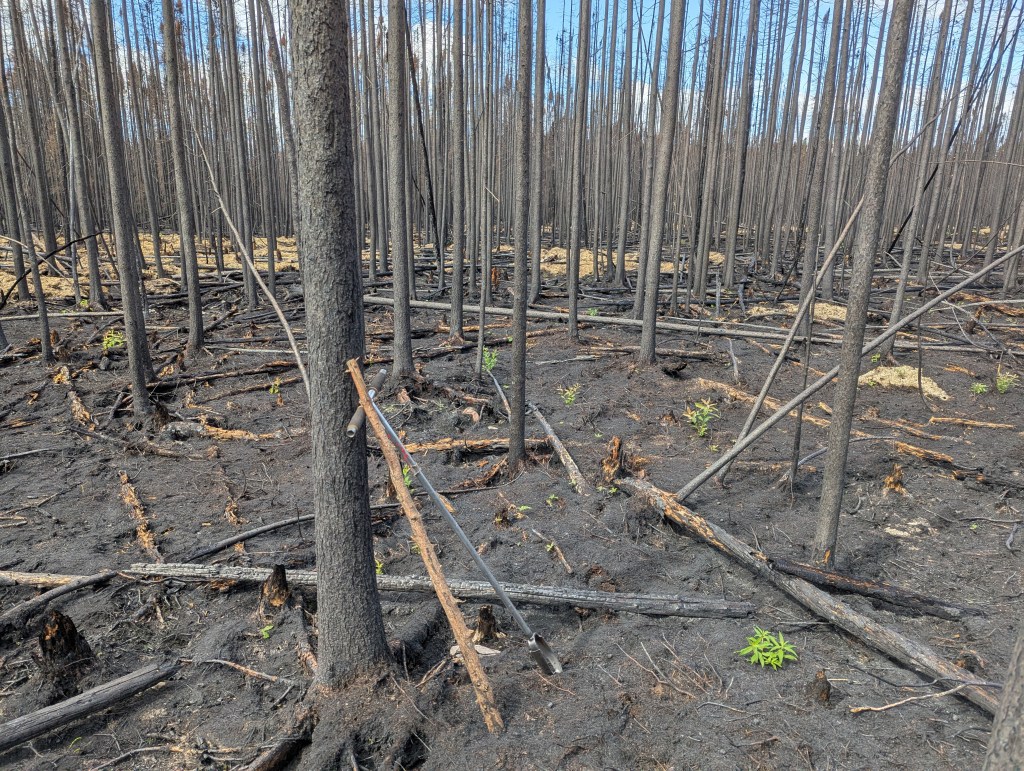
I experienced an incident of getting ‘sun fucked’ (heat exhausted), through nausea and cramps in my legs, and that was enough for me to start carrying more fluid, in spite of the weight penalty. There was one instance where a colleague was badly exhausted to the point where they stopped sweating (a really bad sign – it means the body has no more fluid to use). We flew the helicopter over to near their location, my colleagues located them using the helicopter after I’d gotten out and provided electrolyte fluid on foot. Our casualty then lowered their core body temperature by flinging themselves into the nearest river. I won’t kid you that I immediately sprang into action; all my training was about ‘being called to a scene’ and from the radio correspondence, it seemed to me like the casualty was basically at their helo pick-up point. In reality, they were several hundred metres from it, and were delusional, so it was someone else’s idea that I should actually walk out and provide first aid. But it got done, and that is what matters.
Relatedly, it got so hot that an errant lightning strike could set the whole thing off, and the inevitable happened, and our entire camp was evacuated owing to a forest fire. After work one afternoon, I spotted an ash cloud that was alarmingly close to camp. The wind was blowing in our direction, and eventually we were ordered to get out of dodge.
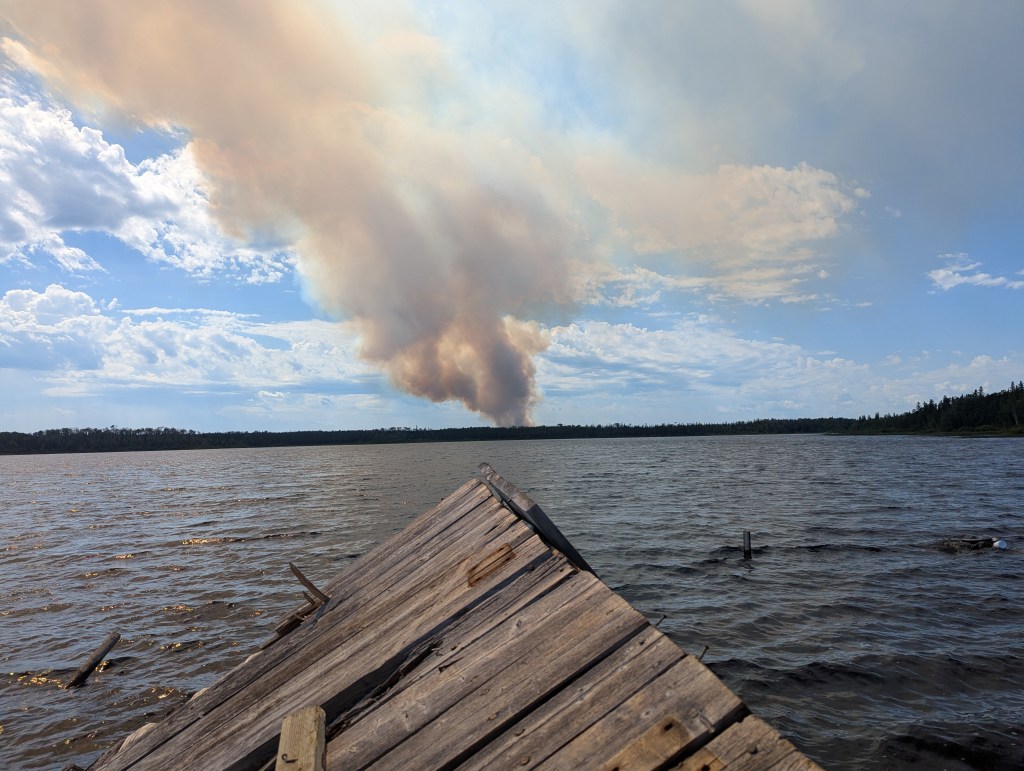
All my colleagues dragged their stuff down to a spit of sand where our helicopter pilot (more on this later) scooped up belongings and shuttled them to a nearby airport, from where we flew via charter plane to Thunder Bay. By the time we got to Thunder Bay, the skies were dark orange from ash. People there commented they’d never seen anything like it. The ash started to fall like light drifting snow, and I could feel it was difficult to breathe. No wonder firefighters have shorter-than-average life expectancy.
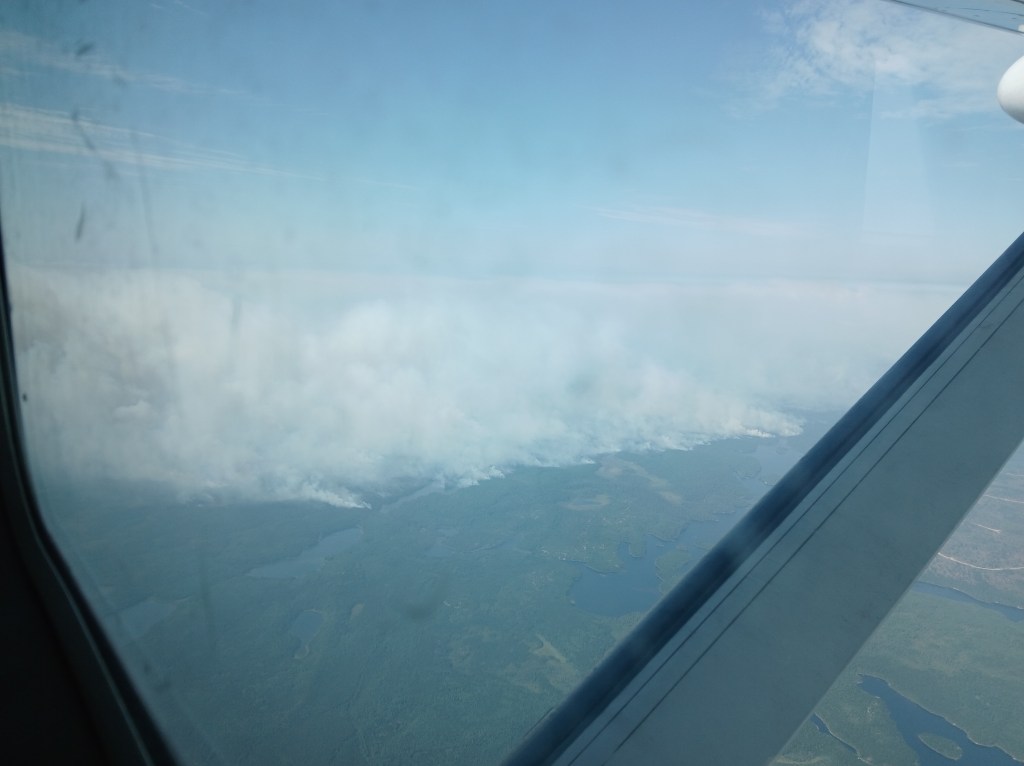
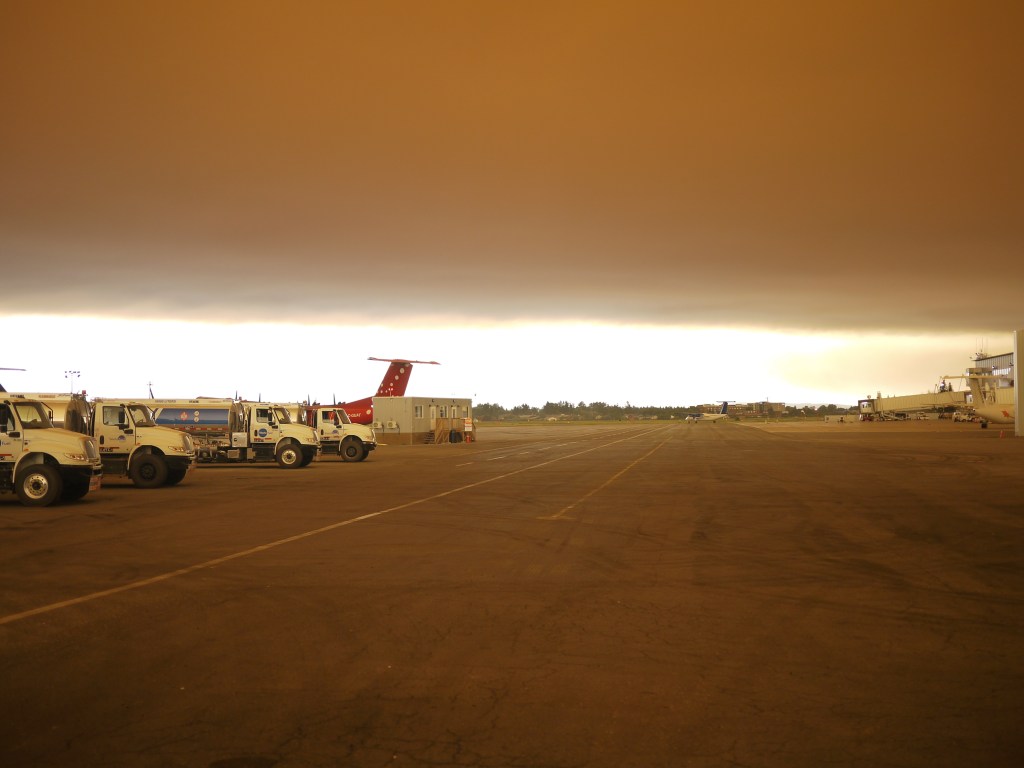
Anyway, what I learned was that being highly cautious with hot weather is really important. Once it cooled down suddenly in August, I was really relieved. We’ve got at least one month more of ‘soiling’ in September, and while it is still solo work, the high heat is something I’ve learned is to be really respected.
I learned that helicopters, while cool, do need their own TLC to be used as ‘company cars’
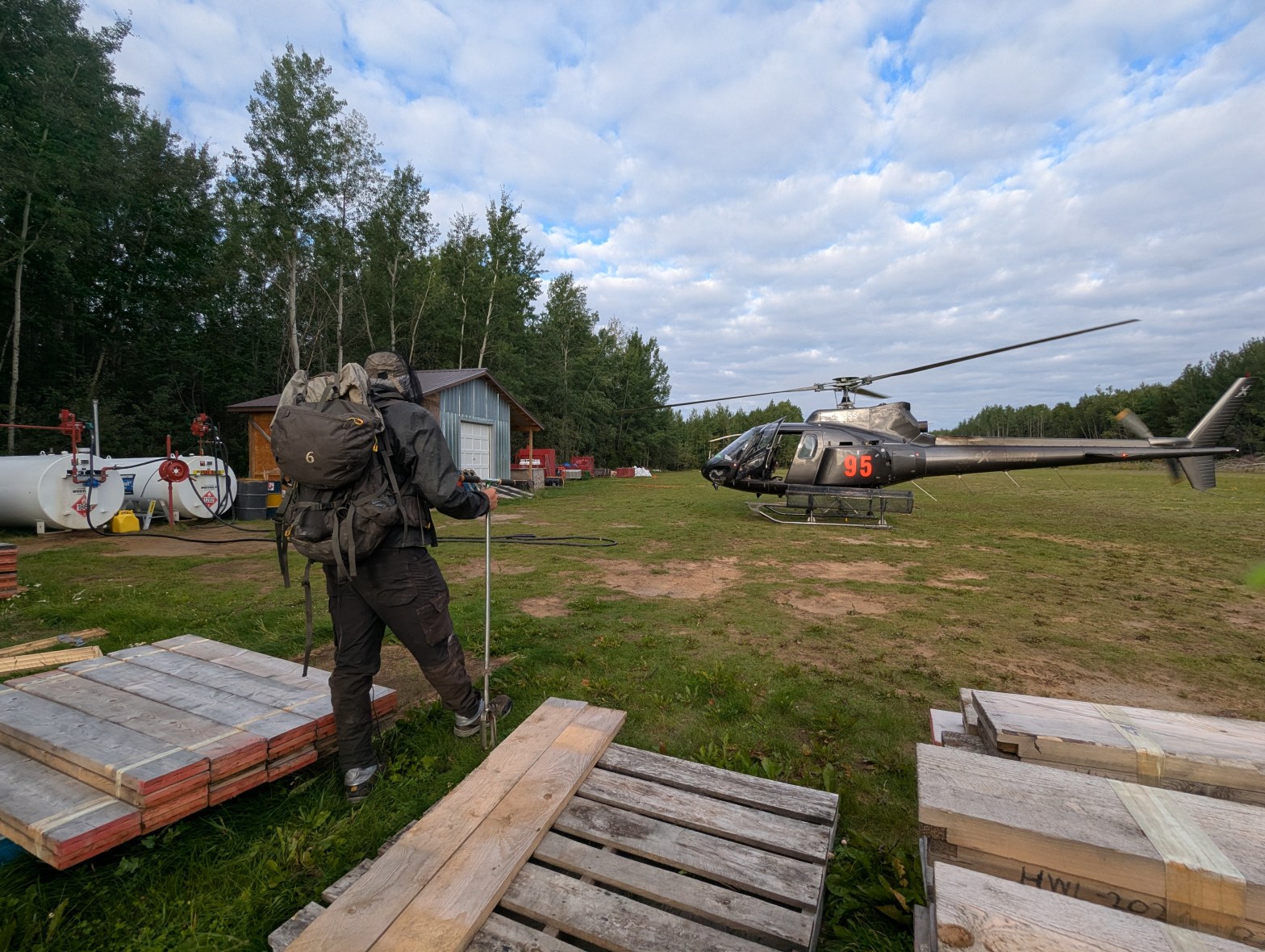
One of the coolest things about this job is that, on the vast majority of days, you’re getting flown in a helicopter to work. It is pretty crazy that daily helo trips are just part of going to work, but there it is. Something I learned straight off the bat is that when the helicopter pilot is meeting you separately for day one, it’s essential that someone brings them lunch, which is very important – no one is a winner when the pilot is hungry.
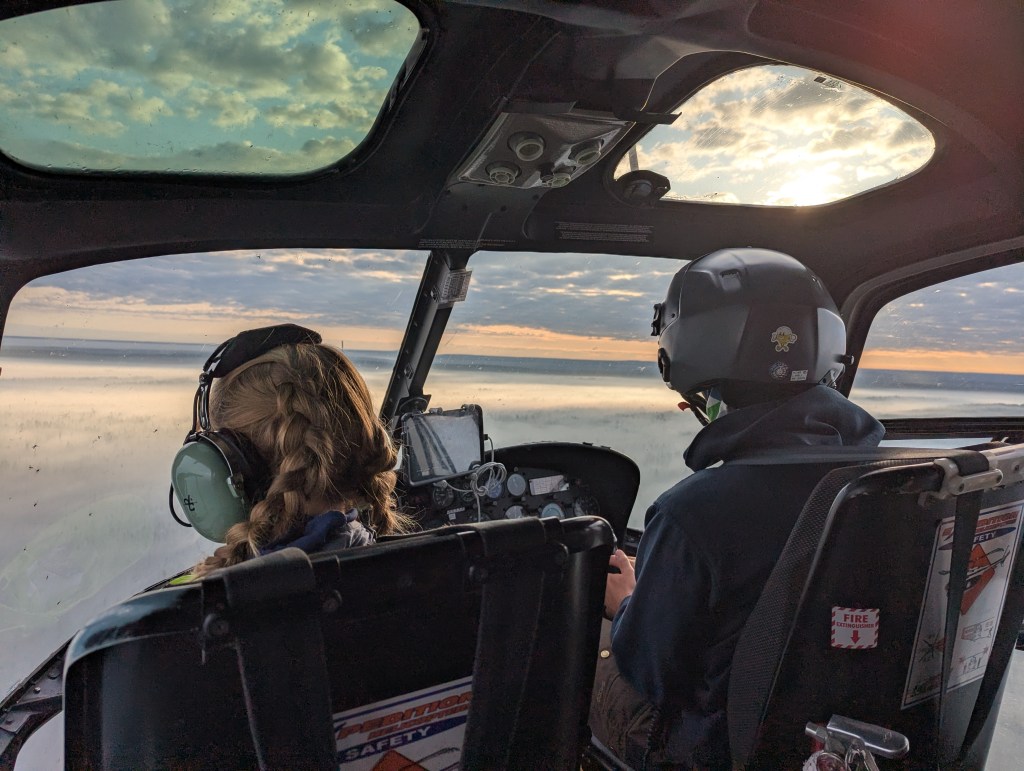
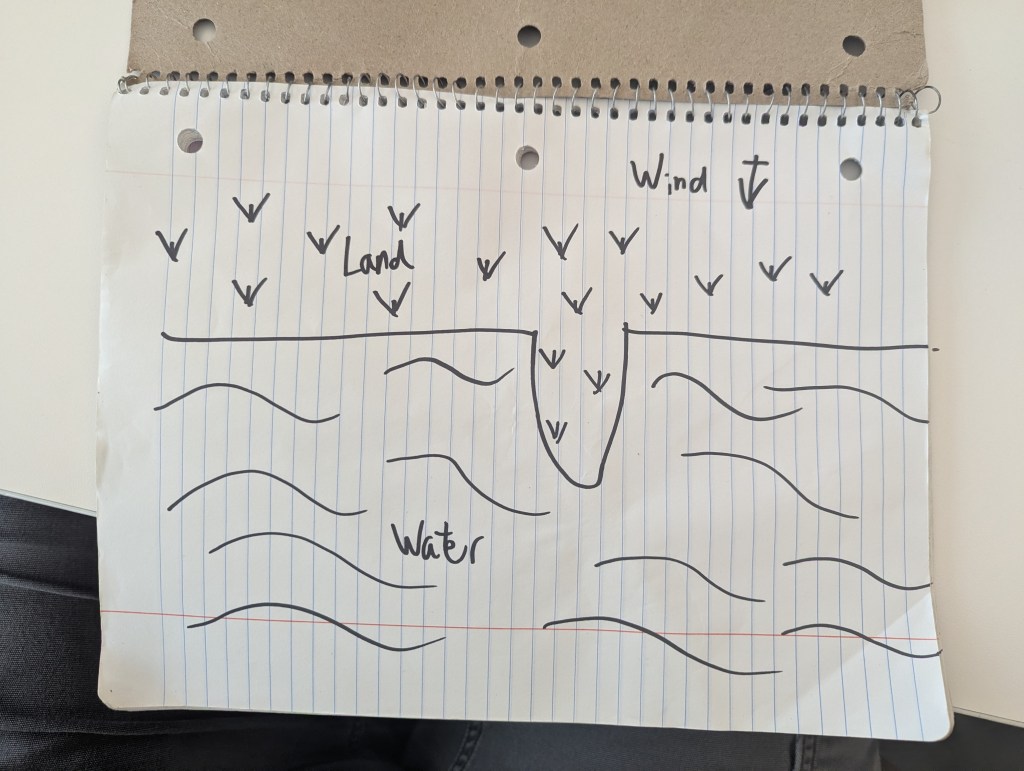
A hugely important piece of gear, that can’t be forgotten for this job, is a saw. The saw is used in the preparation of helicopter landing pads. The bolt that holds the saw inside the hilt, on mine, actually came loose, so I’d recommend sticking some mild threadlocker on it to guard against this happening. What I’ve learned is that pilots want: all the trees (including bushes) gone; they want their tail rotor, especially, to be clear of anything that could impact it, so ideally over a lake; they want their angle of approach to be a ‘J,’ not to be approaching the pick-up site from the archetypal ‘high to low’ descent, if it can be helped; and they want to be landing directly into the wind. When they’re perpendicular to the wind, the fuselage of the helo is like a giant sail, so coming at the wind head-on is massively preferable to it being side-on. One of my colleagues was good at finding the wind direction by throwing grass into the air. I liked to hang ‘flagger’ from trees, with a middle bit sticking out, so I could easily track the wind’s direction if it changed (it sometimes would).
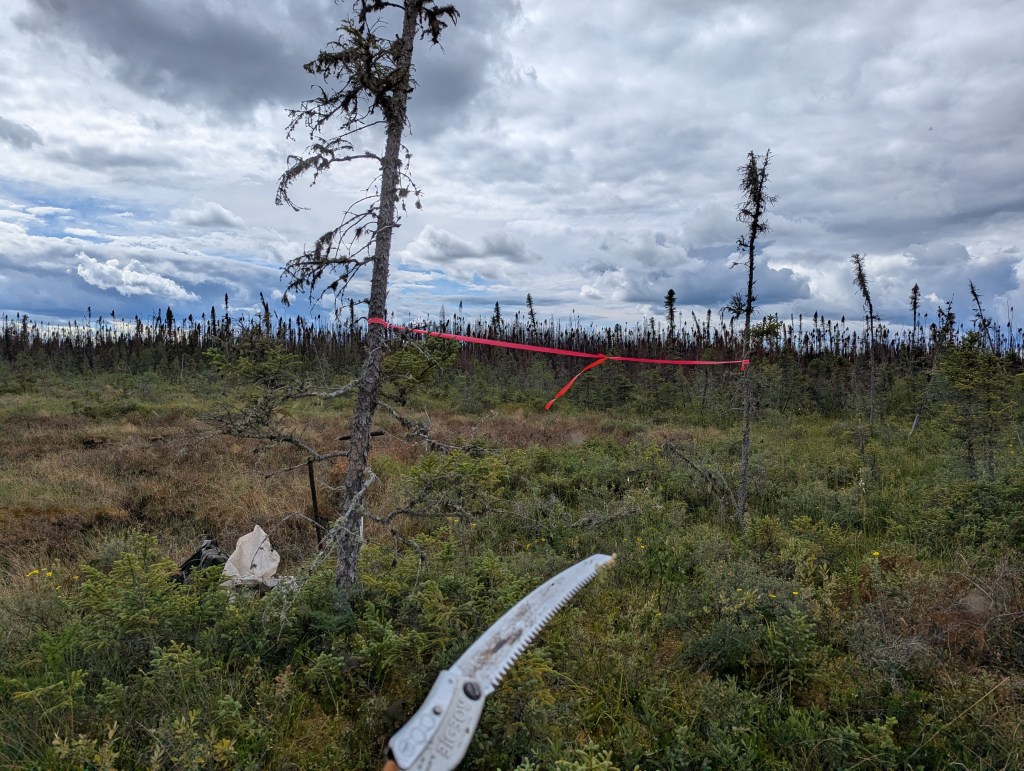
It wasn’t uncommon for pilots to outright refuse to pick people up from unsuitable places. They’d either radio “cut that tree down” instructions, or just fly off. This is fair enough because a helicopter problem is really something we can all do without. The real fear I always had was ‘missing the helicopter’ and having to spend the evening out in the boonies with limited food and fluid, keeping yourself warm as it got dark. Thankfully, this didn’t happen to me, but it did require some quick action. Once, my ‘line’ was miscalculated, so I had to literally run to the helicopter pickup spot as the pilot was about to complete their final shift and wouldn’t wait around for people. I made it with a few spare minutes.
Something else I learned is that you have to control flying object damage risk – or FOD. Any kind of loose item can be caught by the ‘wash’ from a helicopter and start flying around, upon which it poses a ‘rotor strike’ risk. One time I was cutting a helipad with a clear plastic sandwich bag in my back pocket, which somehow got loose, and I watched in horror as the helo disc wind blew it around, thankfully away from the vehicle. From that point on, anything I had that was liable to blow loose would just go straight in my backpack out of harm’s way. It isn’t great that it happened, but by sharing that it did in a safety meeting, it hopefully stops it happening again.
Pilots will point out spots that look good to them when you reconnoitre the line, before you are dropped off. I was really poor at this to begin with, but found good practice is to link your Garmin to your (work) smartphone, open the ‘explore’ app while flying, and then tag locations with reference to what is pointed out to you, whereupon the location will be saved for later use – you can even change the emoji. If you miss it or need further clarification, say so, and the pilot will just fly around again.
The other thing is that a hovering helicopter is much like a person standing on one leg. So long as they can fix their gaze on something, they can hold balance for some time, but the pilot literally can’t look anywhere else. There’s no ‘hover button;’ it’s entirely manual. Try this yourself; stand on one leg, holding the other foot with your hand like you’re stretching, and stare at a fixed object – it’ll probably be fine. Then shut your eyes and shake your head around; you’ll fall over. This is a strong reason why pilots can’t (or shouldn’t) fly at night. Because of this, a pilot will be highly reliant on an observer to tell them what’s going on through the helicopter’s microphone system (‘Sam exiting helicopter, Sam opening basket, Sam retrieving bag, thumbs up from Sam, good to go’). If you’re observing, it’s good practice to communicate as if the pilot can see nothing because they’re busy hovering.
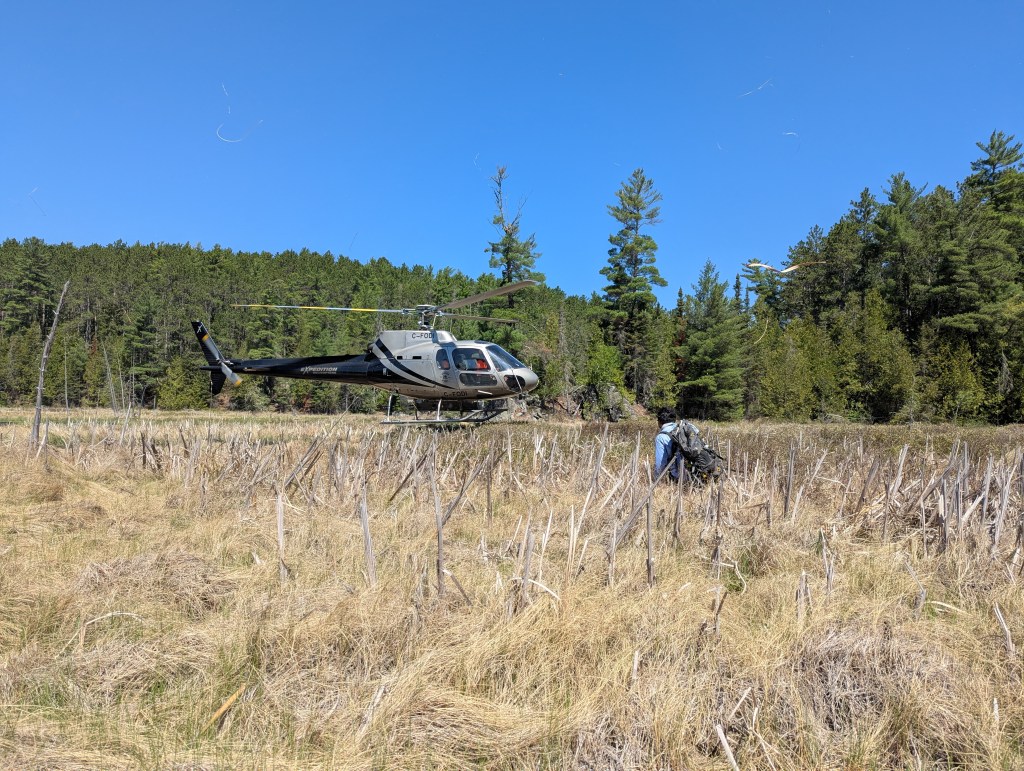
I’m not a helicopter expert and had to do a lot of learning in this job. Frustratingly, there isn’t much info available online about helipads and working with helicopters – this may be the first post of its kind. Helicopters are undoubtedly very cool and fun to be around, and it is really sick that getting on them is part of the job, but they are to be respected and taken seriously.
Ticks really are a nuisance, and boy will you encounter them
Probably the biggest pain in the neck on rotations one and two were the ticks. I don’t know where they get their drinking water, but they’re immune to all physical damage and just don’t stop. We’d all wear long sleeves and tie our stuff down, but you’ll come across them nonetheless. I won’t forget that I was once sat on a rock waiting for a helo and a tick just walked straight up to me bold as brass, somehow seeking me out. It’s especially not great for everyone when one of them starts walking on the pilot’s jacket collar as they’re flying the helicopter. It wasn’t uncommon for me to get home and find them on my clothes. They’re immune to any physical trauma we could come up with. I think the only permanent way of killing them was incineration with a cigarette lighter, or yeeting them into the intake of a helicopter engine (don’t actually do this).
As you may know, ticks can carry Lyme’s disease, so a daily tick check became super important in the rotations when they abounded. If a tick bite is found, then (in Canada) I’d recommend grabbing a photo of the bite plus the animal using eTick. If nothing else, it’s some kind of paper trail if you have to make an insurance claim. We did have one person with the ‘bull’s eye’ which means they’ve had a bite and can suggest they’ve contracted Lyme’s Disease. I think they got paid-for testing and were given the all-clear.
Something you’ll need to get used to, if you move to Canada from the UK, is how provincial everything is. Instead of one big government that manages everything, things such as healthcare, driving licences and other services are provided by the provincial government. So you have to defer to e.g. Ontario tick guidance if you’re bitten in Ontario. I found this very confusing, but when in Rome.
The good news is that tick activity declines sharply in the late summer. When I started work, they’d be everywhere. I guess they’ll be back out again next year. Oh well.
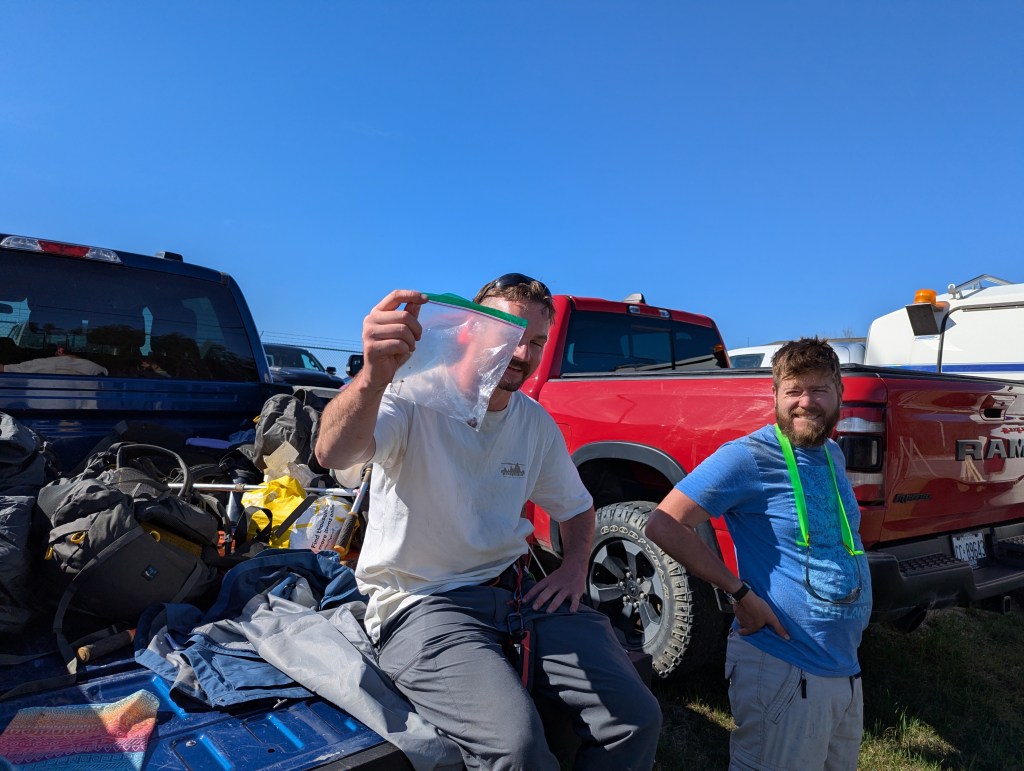
The real quota really is the fun you have on the way
Did I mention the job is cool as hell? Because it is.
Doing a job like this, you will see some really incredible things. If you’re like me and from a city in the UK, this is the kind of thing you just can’t witness. 90% of the UK is out of bounds for non-landowners. By comparison, this is all out in ‘crown land,’ which has no owner, and us logging minerals in this way obliges the company to get in there and start exploiting within a few years before the claim is invalid. It isn’t at all uncommon for people to just come out to these places and do whatever the hell they want. It isn’t necessarily as remote as you might think, because as a soiler, you’re exploring places where the minerals can be extracted via truck, normally not a million miles from a major road, but it’s still seriously cool.
I don’t really know where I go from this. There are downsides of this ‘seasonal’ work – you’re away from friends and family for pretty sustained periods, and I’d taken for granted being able to go home and do stuff after work. In a job like this, you are isolated with your colleagues, and if you’ve got a time difference, you’re only able to talk to people from your hometown in the morning (your time). A few people have discussed just trying to do a month at a time rather than an entire season-long campaign. It’s tricky. But you see amazing stuff on the daily, and work with incredible people, which makes it worth it. Anyway, that’s my learnings, enjoy the images. Sayonara.